Reservations and payment
1. How can I book an apartment on the island of Krk through Adriatic.hr?
Booking an apartment on the island of Krk is easy. You can use our search engine at the top of the page where you can filter the accommodation according to your preferences (location, number of people, dates, amenities). Once you have found the right apartment, click "Book" and follow the instructions to complete your reservation. Alternatively, you can contact us by phone at +385 21 456 456 or by e-mail, and our team will help you find the ideal accommodation.
2. What payment methods are available?
You can pay by credit card (Visa/MasterCard/Maestro) during the booking process or later via the link in the email you receive with payment instructions
By bank transfer: We will send you all the information you need for payment to the email address you provided when you made the reservation through our website.
3. What is included in the standard equipment of an apartment on Krk?
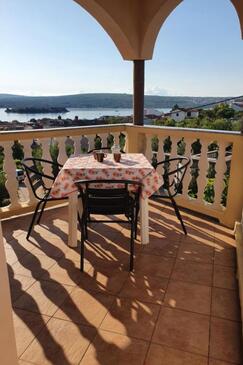
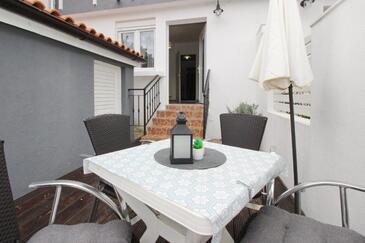
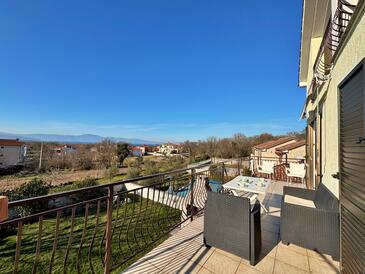
The standard equipment of our apartments on the island of Krk includes: a fully equipped kitchen (dishes, cutlery, pots, pans, refrigerator), bathroom with shower, bed linen, bath towels (not beach towels), TV, free Wi-Fi, air conditioning (in most apartments), terrace or balcony. Many apartments also offer additional facilities such as a washing machine, dishwasher, barbecue, private parking, etc. The exact equipment of each apartment is listed in detail in its description on our website.
4. Are the apartments suitable for families with children?
Most of our apartments on the island of Krk are ideal for families with children. Many offer additional equipment for children such as cots, high chairs, stair gates and beach toys. Also, many apartments have safe outdoor play areas, shallow pools or are located near beaches with shallow entrances to the sea. In the description of each apartment you can find information about child-friendliness and available children's equipment. If you have specific needs, our team will help you find the ideal accommodation for your family.
5. Can I bring a pet to the apartment?
Some apartments on the island of Krk accept pets, but not all. Each apartment description clearly states whether pets are welcome. If you are planning to travel with a pet, we recommend using the "Pets" filter in our search engine. Please note that most apartments that accept pets charge an additional fee (usually €5-10 per day) and may have special policies. It is also important to know that some public beaches do not allow pets, but there are also beaches where they are welcome.
6. Do the apartments have internet/Wi-Fi access?
Yes, the vast majority of our apartments on the island of Krk offer free Wi-Fi access. The quality and speed of the connection may vary depending on the location and service provider. In rare cases, especially in very rural areas of the island, the internet connection may be limited or unavailable. Each apartment has list of amenities that indicates whether Wi-Fi is available.
Beaches and locations
7. What are the most beautiful beaches on the island of Krk?
The island of Krk boasts many beautiful beaches. Vela Plaža in Baška is one of the most famous - 1800 meters long with a Blue Flag certificate, offering numerous facilities such as beach bars and water sports. Vela Luka Beach, accessible only on foot or by boat, is known for its fine pebbles and sand. Potovošće Beach near Vrbnik has pebbles and a beach bar. For families with children, the sandy Sveti Marek Beach is ideal, with easy access and parking. Many consider Oprna Beach to be the most beautiful on the island, but it can only be reached by a narrow path or boat. The distance to the nearest beach and the type of beach are listed in the description of each apartment.
8. Which place on Krk should I choose for accommodation?
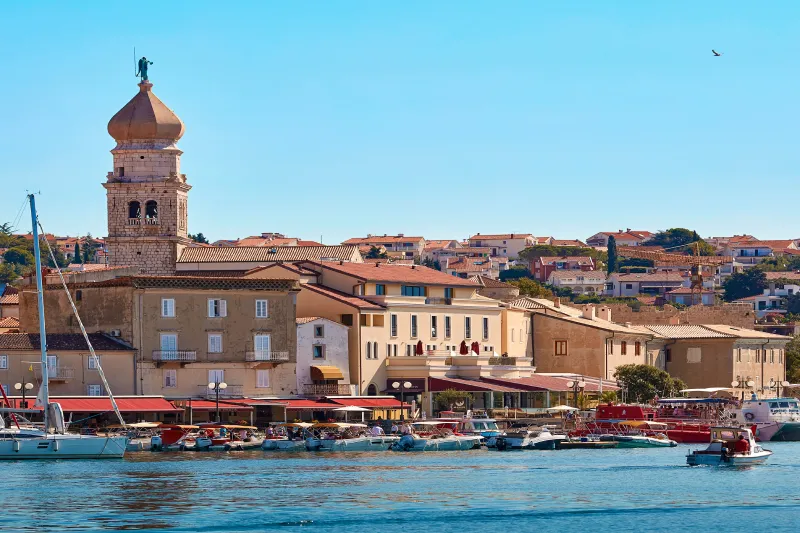
Choosing the ideal place depends on your preferences. The town of Krk is the island's capital with a rich historical center, numerous restaurants and shops - perfect for those who want to be in the center of the action. Baška is known for its beautiful beach and active nightlife. Malinska offers a quieter environment with beautiful coves and lush vegetation, ideal for families. Njivice is a former fishing village with beautiful beaches, often with more affordable accommodation prices. Punat is known for the largest marina in the Adriatic and the proximity of the islet of Košljun. Vrbnik, located on a cliff, offers a unique experience in a medieval town famous for its Žlahtina wine. For a quiet holiday in nature, consider the interior of the island with its authentic villages.
9. How far are the apartments from the beach?
The distance of the apartments from the beach varies depending on the location. We offer apartments located directly on the beach (first row to the sea), apartments 50-300 meters from the beach (second row) and apartments in the interior of the town that can be 500-1000 meters from the beach. The distance to the nearest beach is clearly stated in the description of each apartment. Our search engine allows you to filter apartments by distance from the beach, so you can easily find the accommodation that suits your wishes. Please note that apartments closer to the beach usually have a higher price, especially during the high season.
10. Are there any beaches suitable for children on the island of Krk?
Yes, the island of Krk has many beaches that are ideal for families with children. Dražica beach in Krk has a shallow entrance to the sea and a children's playground. Porporela beach also in the town of Krk has a special section for children. In Njivice, Njivice beach has shallow sea and fine pebbles. Jert beach also in Njivice has a children's playground and a shallow entrance to the sea. In Malinska, Malin beach has a special section for children and numerous facilities. In Baška, the western part of Vela plaža has a shallow entrance to the sea. Most of these beaches also have additional facilities such as showers, toilets, cafes and restaurants nearby.
11. Are there any beaches on Krk where pets are allowed?
Yes, there are several beaches on the island of Krk where pets are allowed. The dog beach in Baška is located at the western end of Vela Plaža. In Njivice, there is a designated area of Kijac beach where dogs are welcome. In Krk, Dražica beach has a special area for swimmers with dogs. In Punat, Medane beach also allows pets. Soline beach in Klimno has an area where dogs are allowed. It is important to note that on these beaches dogs must be on a leash when not in the sea and owners are required to clean up after their pets. We recommend that you always check local signs and rules as regulations may change.
Transportation and arrival
12. How to get to the island of Krk?
The island of Krk is one of the most accessible Croatian islands. The easiest way to get there is via the Krk Bridge, which connects the island to the mainland - the toll is charged only in one direction (towards the island). If you are arriving by plane, Rijeka Airport is located on the island itself, near Omišalj, with connections to 17 European cities during the summer season. It is only 10 km from Njivice and 25 km from the town of Krk. Regular bus lines connect the island with Rijeka and Zagreb. Also, during the summer season there are ferry lines connecting Krk with the islands of Cres and Rab. After arriving on the island, you can use local transport, taxi or rent-a-car to get to your apartment.
13. Is a car needed during your stay on Krk?
Although not essential, a car makes exploring the island of Krk much easier. The main island road is 45 km long and connects all major towns. Public transport (buses) is available between the main settlements, but the schedule can be limited, especially outside the high season. If you plan to spend most of your time in one town and on nearby beaches, you may not need a car. However, if you want to explore different parts of the island, visit hidden coves or enjoy a night out in different places, we recommend having a car. Many apartments offer free parking, which is stated in their description.
14. Is there public transport on the island of Krk?
Yes, there is a public bus network on the island of Krk, operated by the company Autotrans. Bus lines connect the main settlements on the island, such as the town of Krk, Baška, Malinska, Njivice, Punat and Vrbnik. During the summer season (June-September), the schedule is more frequent, while during the off-season the number of departures is limited. We recommend that you check the current schedule on the official Autotrans website or at the bus stations. Ticket prices are reasonable, and you can also buy daily or multi-day tickets if you plan to use public transport more often. Please note that the last buses usually run early in the evening, especially outside the high season.
15. Where can I rent a car on the island of Krk?
There are several car rental agencies on the island of Krk. The largest concentration is in the town of Krk and near Rijeka Airport. Well-known international agencies such as Hertz, Avis and Sixt have offices at the airport. Local car rental agencies often offer more competitive prices and can be found in larger towns such as the town of Krk, Baška, Malinska and Njivice. We recommend booking a car in advance, especially during the high tourist season (July-August) when demand can be high.
16. How much does the toll for the Krk Bridge cost?
The toll for the Krk Bridge is charged in one direction only - when you arrive on the island (direction Rijeka-Krk). Returning from the island to the mainland is free. The price of the toll depends on the vehicle category. For passenger cars (category 1A) the price is €5.30 throughout the year. For motorcycles and motorbikes the price €3.30. For campers, vans and small delivery vehicles the price is higher. Payment is possible in cash (euro) or by credit card. There is also the option of using an ENC device (electronic toll collection) which offers a 10% discount. Please note that prices are subject to change, so it is a good idea to check the current information before traveling.
Activities and attractions
17. What activities are available on the island of Krk?
The island of Krk offers numerous activities for all ages and interests. For water sports enthusiasts, sailing, windsurfing, kitesurfing, paddleboarding, jet-skiing and diving are available. Active tourists can enjoy hiking (the Baška-Vela Luka trail is particularly popular), cycling on groomed trails, climbing and ziplining above Baška. Cultural tourism includes a visit to the Frankopan Castle in the town of Krk, sightseeing of the Baška Tablet in Jurandvor, a tour of the Franciscan monastery on the islet of Košljun and exploring the medieval town of Vrbnik. Gastronomic enthusiasts can enjoy tasting Žlahtina wine in Vrbnik, visit olive oil mills or participate in the olive and grape harvest (seasonal). For families with children, there is an aquapark in Baška, mini golf, children's playgrounds and organised boat trips.
18. What are the most important cultural and historical sights on Krk?
The island of Krk has a rich history dating back more than 3000 years. The most important cultural and historical sights include: the Frankopan Castle in the town of Krk from the 12th century; the Cathedral of the Assumption of the Blessed Virgin Mary also in the town of Krk; the Baška tablet in the church of St. Lucy in Jurandvor - one of the most important Croatian historical monuments from 1100; the Franciscan monastery on the islet of Košljun with a rich collection of art and a library; the medieval town of Vrbnik situated on a 50-meter-high cliff; the Roman remains in Fulfinum-Mirine near Omišalj; ethnographic collections in Dobrinj and Vrbnik depicting the traditional life of the islanders. Most of these sights can be visited throughout the year, and entrance fees are usually very affordable.
19. Where can I taste local food and wines on the island of Krk?
The island of Krk is famous for its gastronomy and wines. For tasting local specialties, we recommend taverns and restaurants that offer traditional dishes: in the town of Krk, the restaurants Galija and Karaka; in Vrbnik, the taverns Nada and Žlahtina, where you can taste the famous Vrbnik wine Žlahtina with šurlice (homemade pasta); in Baška, the restaurants Cicibela and Baska; in Malinska, the restaurants Mulino and Intrada. For wine tasting, it is best to visit Vrbnik, where there are numerous wineries with organized tastings - Katunar, Nada, Šipun and Žlahtina. You can taste olive oil at the oil mills of the OPG Utla in Krk and the OPG Volarić in Vrbnik. Local cheese and prosciutto are available at numerous OPGs and markets. During the summer season, traditional food and wine evenings are organized in many places where you can taste various local specialties.
20. Are there organized excursions from the island of Krk?
Yes, you can take part in numerous organized excursions from the island of Krk. The most popular are boat excursions that depart from the main tourist resorts (Krk town, Baška, Malinska, Njivice) and visit the nearby islands of Cres, Rab and Lošinj or the hidden coves of Krk itself. Excursions to the islet of Košljun with its Franciscan monastery and to Vrbnik are especially popular. Excursions to the mainland are also organized - to the Plitvice Lakes National Park, Risnjak National Park, Opatija or Istria. For those who enjoy active holidays, there are organized kayak excursions, cycling tours and guided walking tours. Excursions can be booked at local travel agencies in all major towns on the island.
21. What is the nightlife like on the island of Krk?
Nightlife on the island of Krk varies depending on the location and season. During the high season (July-August), it is liveliest in Baška, which has several nightclubs and beach bars with live music and DJs. The town of Krk also offers a good nightlife with bars in the old town and occasional concerts on the main square. Malinska and Njivice have several seaside bars with music until late. Vrbnik is known for its wine bars where you can enjoy the local Žlahtina wine in a relaxed atmosphere. Outside the high season, the nightlife is much quieter, with a few bars open on weekends. During the summer, all larger towns organize various festivals, concerts and fishermen's festivals, which often last until late at night. Please note that most clubs and bars with music close around 2-3 am, in accordance with local regulations.